Posted on Leave a comment

The Lakes Signature: A Decade in the Making, A Lifetime to Savour

The Dawn of a New Era in Single Malt Whisky

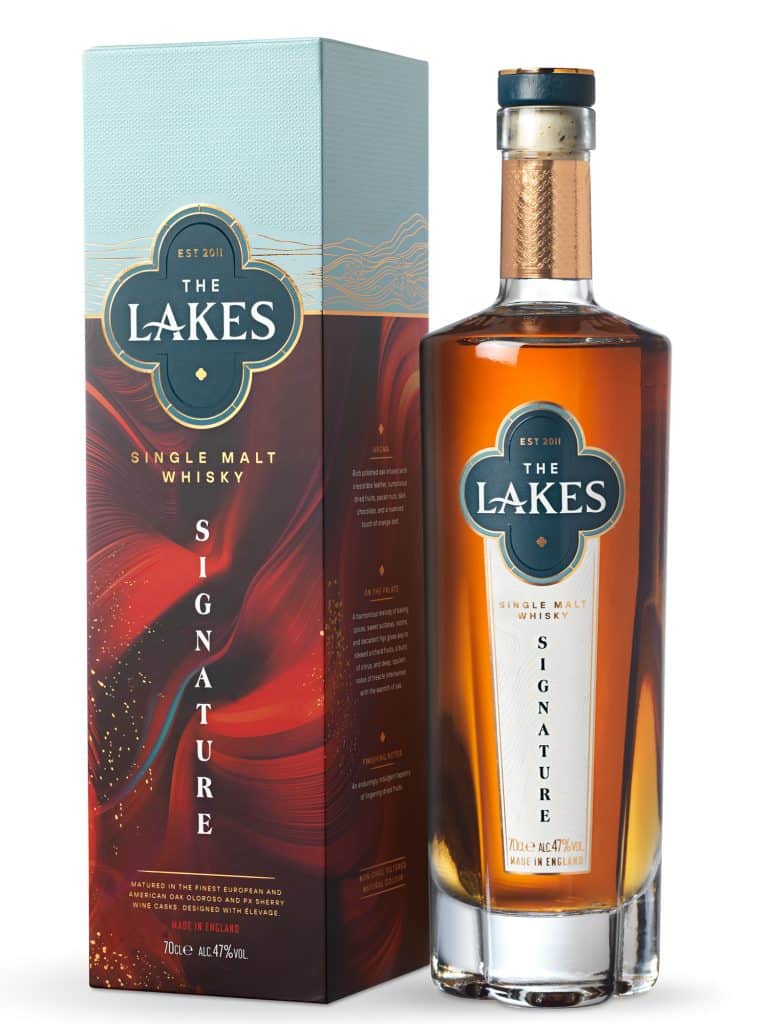
The Lakes Distillery introduces its first permanent single malt whisky style, The Lakes Signature. The culmination of an extraordinary decade-long journey, it emerges from the renowned Whiskymaker’s Reserve series as a refined and enduring expression of sherry-led craftsmanship.

Elevating Whisky Through the Art of Élevage

Central to The Lakes Signature is the French philosophy of élevage, a progressive nurturing of spirit through a succession of specially chosen casks. This meticulous approach allows the whisky to evolve with nuance and maturity, unlocking a depth of flavour that’s both complex and harmonious. Learn more about the Art of Élevage.

Crafted in Excellence: Sherry Cask Maturation

This opulent single malt is matured in the finest European and American oak casks, seasoned with Oloroso and Pedro Ximénez (PX) sherry. These exceptional casks impart rich, indulgent character and imbue the whisky with multi-dimensional flavour profiles.

Tasting Notes: An Intricate Tapestry of Flavours

Aroma

The first encounter reveals rich polished oak and soft leather, seamlessly layered with sumptuous dried fruits, think raisins and sultanas, elevated by pecan nuts, dark chocolate, and a delicate orange zest.

Palate

On the palate, The Lakes Signature unfolds in luxurious waves of sweet sultanas, raisins, and figs, blending into stewed orchard fruits. These sweet notes are complemented by bright citrus, while dark treacle and warm baking spices, vanilla, cinnamon, and nutmeg, provide a comforting richness.

Finish

The finish is long, elegant, and lingering, with the enduring warmth of nutmeg and dark treacle, leaving behind the lingering sweetness of raisin and fig.

Whisky Details at a Glance

  • ABV: 47%
  • Filtration: Non-chill filtered
  • Colour: Natural

A Whisky Born of Obsession and Inspired by Nature

The Lakes Signature isn’t merely a spirit, it is the manifestation of a relentless pursuit for perfection. Each sip reflects the natural beauty of the Lake District, a region whose ever-changing landscapes echo the dynamic character of this whisky.

A Permanent Signature with Timeless Appeal

Where previous editions were momentary glimpses into the creative mind of The Whiskymaker, The Lakes Signature is a lasting declaration, a whisky designed to endure and evolve as a modern classic in the world of single malts.

Perfect For: The Sophisticated Whisky Lover

Whether you’re a seasoned collector or a curious newcomer, The Lakes Signature invites you into a world of elevated taste, craftsmanship, and discovery. Its rich and balanced profile makes it an ideal choice for moments of reflection, celebration, or gifting.

The Most Challenging Path, The Most Rewarding Journey

From sherry-seasoned oak to a sensory masterpiece, The Lakes Signature is a whisky like no other. Its layers unfold slowly, luxuriously, a testament to time, passion, and an unyielding commitment to flavour.

FAQs

1. What is élevage in whisky making?
Élevage refers to the art of nurturing a spirit over time through carefully selected cask changes to shape its flavour profile progressively.

2. Is The Lakes Signature a limited edition?
No, it is the first permanent single malt whisky style from The Lakes Distillery, following the limited Whiskymaker’s Reserve series.

3. What makes it sherry-led?
Its maturation in Oloroso and PX sherry casks imparts dominant sherry influences, giving it rich dried fruit, spice, and treacle notes.

4. What does non-chill filtered mean?
It means the whisky retains its natural oils and flavours, offering a fuller mouthfeel and richer taste.

5. Where can I buy The Lakes Signature?
You can purchase this right here at House Of Malt!

Posted on Leave a comment

Signatory Vintage Scotch: The Art of Independent Bottling

Signatory Vintage Scotch HQ, Pitlochry

Signatory Vintage Scotch is one of the most discerning independent bottlers of Scotch whisky in the world. With a commitment to quality and transparency, Signatory bottles whisky one cask at a time, allowing whisky enthusiasts to experience the distinct characteristics of each unique cask. If you’re searching for exclusive, single cask Scotch, Signatory Vintage is the brand to explore.

View the range of Signatory at House of Malt

What Makes Signatory Unique?

Unlike distilleries that produce large batches for blended whisky, Signatory focuses on individual casks, ensuring that no two bottlings are exactly the same. By sourcing all-natural malts from Scotland’s finest distilleries and selecting the most exceptional single casks, Signatory delivers “single, single, single malt” – single distillery, single distillation, single cask.

  • Single Distillery – Sourced from Scotland’s most renowned distilleries.
  • Single Distillation – Bottled from carefully chosen distillation runs.
  • Single Cask – Every bottle comes from a single cask, emphasising unique flavour and character.

Check out their ever more popular Speyside (M) Bottlings

The Signatory Bottling Process

Signatory Vintage follows a meticulous selection and bottling process that highlights the individuality of each whisky.

  1. Cask Selection – Only the finest casks are chosen from select distilleries.
  2. Aging & Maturation – Each cask is left to mature naturally, developing rich flavors.
  3. Bottling – Each whisky is bottled with key details such as date of distillation, bottling date, cask number, and bottle number for full transparency.

Why Choose Signatory Vintage?

  • Natural Whisky Experience – No added colouring or chill filtration, preserving whisky’s true character.
  • Transparency & Traceability – Every bottle carries detailed cask and distillation information.
  • Exclusivity – Small-batch, single-cask releases make every bottle unique.
  • Award-Winning Reputation – Highly respected in the whisky world for craftsmanship and quality.
  • Affordability – Some superb malts are available at a fraction of the cost!

Explore Signatory’s Distinctive Bottlings

Signatory Vintage offers a broad selection of Speyside, Islay, Highland, and Lowland single malts, each with its own distinctive profile. Whether you’re seeking a rich serried dram or a peaty Islay expression, there’s a Signatory bottling for every palate.

Visit the Signatory website for more information

For whisky collectors and enthusiasts, Signatory Vintage Scotch represents an opportunity to experience some of Scotland’s finest single cask whisky with unparalleled transparency and exclusivity. Every bottle tells a story of its own, offering a rare glimpse into the craftsmanship behind Scotland’s greatest distilleries.

Discover your perfect dram today by exploring the Signatory Vintage collection at House of Malt and experience the magic of single cask whisky.

Browse Signatory Bottlings Now

Posted on Leave a comment

Pol Roger Champagne: A Legacy of Elegance and Craftsmanship

When it comes to luxury and refinement, few champagne houses can rival Pol Roger. This esteemed brand has captivated connoisseurs and royals alike, embodying the very essence of fine French champagne. From its storied history to the exceptional terroir of its vineyards, Pol Roger’s commitment to excellence is evident in every bottle.

For those looking to experience an exceptional champagne, the Pol Roger Brut Reserve NV is a must-try. Available now at House of Malt, this refined champagne is a perfect balance of power, elegance, and complexity.


A Storied Legacy: The History of Pol Roger

Founded in 1849 by Pol Roger, this family-run champagne house has remained synonymous with quality and tradition for over 170 years. Located in Épernay, the heart of the Champagne region, the house has been dedicated to crafting exceptional champagnes that have stood the test of time.

Pol Roger gained international fame when it became the favorite champagne of Sir Winston Churchill. His admiration for the brand was so profound that Pol Roger later honored him by creating the Cuvée Sir Winston Churchill, a vintage prestige cuvée that remains one of the most celebrated champagnes worldwide.

For more insights into Pol Roger’s history, visit their official website: Pol Roger Champagne.


The Terroir: Where Pol Roger Vineyards Thrive

The foundation of any great champagne lies in its terroir. Pol Roger sources its grapes from some of the finest Grand Cru and Premier Cru vineyards in the Champagne region. These vineyards are primarily located in the Montagne de Reims, Vallée de la Marne, and Côte des Blancs, areas celebrated for producing the highest-quality Chardonnay, Pinot Noir, and Pinot Meunier grapes.

Why Champagne’s Location Matters

Champagne, France, is the only region permitted to produce authentic Champagne AOC. The area’s cool climate, chalky soils, and unique microclimates create the ideal conditions for growing grapes with the perfect balance of acidity and ripeness. This combination results in the signature crispness, minerality, and complexity that define Pol Roger champagnes.


The Pol Roger Philosophy: A Champagne for Discovery

Pol Roger describes its ethos beautifully:

“There is that moment when the spirit of Pol Roger is revealed. One may think one knows champagne and yet, that day, one truly discovers it.”

This philosophy is woven into every bottle, offering drinkers a moment of revelation with each sip. Whether celebrating a special occasion or simply indulging in luxury, Pol Roger is an experience to be savoured.

With its rich history, exceptional vineyards, and unwavering commitment to quality, Pol Roger remains a timeless symbol of prestige. Whether you are a seasoned champagne enthusiast or a curious newcomer, a bottle of Pol Roger is an invitation to experience the art of fine champagne.

Learn more about this distinguished brand at Pol Roger Official Website or elevate your collection by purchasing a bottle of Pol Roger Brut Reserve NV Champagne today.


FAQs

1. What makes Pol Roger different from other champagnes?
Pol Roger is renowned for its deep family heritage, premium vineyard sourcing, and meticulous winemaking process, including extended ageing for added complexity.

2. Is Pol Roger Brut Reserve NV a vintage champagne?
No, it is a non-vintage (NV) champagne, meaning it is crafted from a blend of different years for consistency and balance.

3. How should I store Pol Roger Champagne?
Store bottles standing up, in a cool, dark place with consistent temperature to preserve quality. Ideal storage temperature is 10-12°C (50-54°F).

4. What is the best way to serve Pol Roger Champagne?
Serve chilled at 8-10°C (46-50°F) in a flute or tulip-shaped glass to enhance the aromas and bubbles.

5. Does Pol Roger offer other champagnes besides Brut Reserve?
Yes! Pol Roger produces Cuvée Sir Winston Churchill, Blanc de Blancs, Rosé, and Vintage Brut, each offering unique flavours and tasting experiences.

Posted on Leave a comment

Perrier-Jouët

The Elegance of Perrier-Jouët: A Champagne Like No Other

There are few names in the world of champagne that evoke the same sense of luxury, craftsmanship, and artistry as Perrier-Jouët. For over two centuries, this legendary Maison has been synonymous with elegance, creating some of the world’s most exquisite champagnes. With its unmistakable floral motif and a dedication to excellence, Perrier-Jouët is more than just a champagne—it’s an experience of refinement, romance, and savoir-faire.

A Legacy of Excellence

Perrier-Jouët was founded in 1811 by Pierre-Nicolas Perrier and his wife, Rose-Adélaïde Jouët, a couple whose shared passion for winemaking and art laid the foundation for a truly exceptional brand. From the very beginning, their goal was to create champagnes of unrivaled quality, with a distinctive floral and delicate character. Their vision set the course for what would become one of the most revered houses in Champagne.

One of the defining moments in the Maison’s history came in 1846, when Perrier-Jouët introduced the first-ever brut champagne, a revolutionary move at a time when champagnes were typically much sweeter. This innovation set a new standard in the industry, redefining how champagne should be enjoyed and appreciated.

The Iconic Belle Époque

Perhaps the most recognizable symbol of Perrier-Jouët is its Belle Époque collection, adorned with the iconic anemone design hand-painted by the renowned Art Nouveau artist Émile Gallé in 1902. This delicate floral motif has become a hallmark of the brand, representing the harmony between nature, art, and craftsmanship that defines Perrier-Jouët’s philosophy.

The Belle Époque cuvées are the ultimate expression of the Maison’s style—elegant, complex, and refined. Each bottle is a masterpiece, both inside and out. With delicate notes of white flowers, fresh fruit, and a silky texture, Belle Époque is a true indulgence for the senses.

To uncork a bottle is to unlock a moment of sheer sophistication, turning any occasion into an unforgettable celebration. It is not just a drink; it is an invitation to immerse yourself in a world of refinement and beauty.

The Art of Celebration – Elevate Every Moment

Perrier-Jouët is more than just a champagne; it is an invitation to celebrate life’s most cherished moments with sophistication and grace. Whether toasting to love, success, or simply the beauty of the present moment, each glass embodies the artistry and passion that have defined this Maison for over 200 years.

Every sip of Perrier-Jouët tells a story—a story of heritage, innovation, and an unwavering commitment to excellence. Its delicate bubbles, enchanting aromas, and impeccable craftsmanship make it a champagne to be savored and shared, elevating any occasion into something truly extraordinary.

For those who appreciate the finer things in life, Perrier-Jouët is more than just a choice; it is a statement. A statement of elegance, artistry, and the joy of experiencing something truly remarkable.

Posted on Leave a comment

Find “The One” With House of Malt

At House of Malt, our passion for whisky extends beyond just offering a diverse range. We take pride in guiding our customers through the rich tapestry of flavours and stories each brand and bottle offers.

1. Glenfiddich – The Pioneer Spirit: Known as one of the most iconic single malt Scotch whiskies, Glenfiddich offers a range of expressions with notes of pear, apple, and subtle oak. Ideal for those who appreciate a classic, well-rounded whisky.

2. Ardbeg – The Peat Powerhouse: Hailing from Islay, Ardbeg is renowned for its deep, smoky flavors, with hints of dark chocolate, aniseed, and strong peat. Perfect for those who seek intensity and complexity in their dram.

3. Macallan – The Sherry Oak Marvel: Macallan whiskies are famous for their rich, robust flavors, influenced by sherry oak casks. Expect a symphony of dried fruits, spices, and chocolate notes, a favorite among connoisseurs.

4. Lagavulin – The Smoky Sophisticate: Another gem from Islay, Lagavulin is known for its rich peaty profile, complemented by a smooth, robust taste. It’s a whisky that commands attention and respect.

5. Hibiki – The Japanese Harmony: Representing the elegance of Japanese whiskies, Hibiki offers a harmonious blend, characterized by its floral and fruity notes, with a smooth, mellow finish.

For those looking to broaden their whisky horizons, resources like Whisky World can provide further insights and information.

At House of Malt, we believe that every bottle of whisky tells a unique story. Our collection is a celebration of this diversity, offering something for every palate, from the peaty depths of Islay to the smooth sophistication of Speyside and beyond. Visit us to explore our selection and embark on a journey through the world of whisky.

Posted on Leave a comment

A Guide to Blended Whisky

Blended whisky is the most popular type of whisky in the world, but despite accounting for more than 75% of the industry’s value, it’s an often misunderstood spirit. 

Irrespective of its ubiquitousness, blends still face somewhat of an image problem, with many drinkers mistakenly believing them to be less complex and generally lower quality than their single malt counterparts.

We’re here to dispel that myth and tell you everything you need to know about blended whisky, including what it is, what the different types are and how it differs from single malt.

What is blended whisky?

Simply put, a blended whisky is a combination of two or more barrel-aged whiskies. This is usually a mixture of malt and grain whiskies, brought together to achieve a certain flavour profile.

Blended scotch is the most biggest category of whisky globally, making up more than 90% of all bottles sold.

The history of blended whisky

While there was an increased desire for single malts around the turn of the millennium, it wasn’t always so in demand. 

Historically, single malt whisky was considered too harsh, with unrefined flavours. As a result, in the 1860s, a Scottish brewer called Andrew Usher began adding lighter grain whiskies to heavier malts. This produced a more approachable spirit that was smoother, sweeter and more balanced – thus becoming a commercial hit.

Blends went on to completely dominate the market for another 100 years, with almost all scotch whiskies being blends. This started to change in the 1960s, when Glenfiddich became the first distillery to release a consumer-friendly single malt, but by the start of the 1980s, there were still only 27 available across the market. 

How is it made?

Blended whisky is made by combining different whiskies together, and the job of combining them comes down to the master blender.

The master blender will use their nose and experience to bring together anything up to 50 single malt and single grain whiskies to create a unique expression.

After they’ve been blended, the new whisky will spend up to eight months in casks, in what is known as the ‘marriage’ period. It’s during this time that the flavours of each individual spirit will mix with the others. 

Age statements

When it comes to age statements, the number listed on the bottle is the age of the youngest whisky used.

This means that if a master blender takes an 18 year old malt and adds a little bit of 10 year old, the result is a 10 year old whisky. 

An example of this can be seen with the Chivas Regal 12, which is a blended scotch made up of whiskies that have been aged for a MINIMUM of 12 years, but will likely contain spirit that’s older (although the recipe is a closely guarded secret!). 

As a result, many blended whiskies don’t carry an age statement at all. This is because, if a master blender adds a small quantity of particularly young whisky to the mix, marketing the release as a 3, 5 or 8 year old blend may be off-putting to buyers. It also probably isn’t a fair reflection of what’s actually in the bottle.

Are there different types of blended whisky?

Blended Scotch Whisky

This is your archetypal blended whisky and what most likely springs to mind when discussing the topic. It involves mixing one or more malt whiskies with one or more grain whiskies. The whiskies must have been distilled and aged in Scotland for a minimum of three years in order to be called scotch whisky. 

Blended malt 

Blended malts, also occasionally called vatted malts, are made without the use of grain. They’re a combination of single malt whiskies from different distilleries. Examples include Monkey Shoulder, Compass Box Spice Tree and Big Peat.

Blended grain

Made exclusively with grain whiskies from two or more different distilleries. Though generally harder to come by, blended grain is praised for its lighter profile and creamier mouthfeel. Some popular expressions are Compass Box Hedonism and Nikka Coffey Grain. 

How does it differ to single malt?

The difference between a blended whisky and single malt is simple.

While a blend can be a combination of different types of whiskies from different distilleries, single malts come from just one distillery and are made using only malted barley.

Where things get a little more confusing is that some (if not most) single malts are actually a vatting of differently aged and finished whiskies – as opposed to just coming from one barrel. However, providing that these whiskies come from the same distillery, and use only malted barley, then they are still released as single malts. 

Are single malts better? 

There is a common misconception that single malt whiskies are higher quality, more flavourful and generally smoother – but this certainly isn’t the case.

Though the maturation process of single malts can often lead to a more robust and full-bodied spirit, the craft that goes into making a well-balanced blend means that consumers may find blended whiskies more approachable. 

They also generally offer good value for money, are great for trying new flavours and are also better suited to cocktails or mixing.


So if you’re looking for an introduction to blends, why not visit our website? We have an excellent range of blended whiskies from all over the world. 

Posted on Leave a comment

What Is Grain Whisky (And Why Do We Love It)?

Once an unheralded component of blends, grain whisky has started to gain a following in its own right. 

Despite their ubiquitous nature in the industry, and the less expensive means of production, distillers have historically overlooked the commerciality of grain whiskies, instead choosing to limit their releases to ‘rare’ or unusual bottlings.

Thanks to some notable names (like Compass Box and Nikka) capitalising on its light and approachable profile, there’s now a range of fantastic grain whiskies hitting the shelves that are definitely worth your time.

Let us tell you everything you need to know about grain whisky, from how it’s made to which ones you should try!

What is grain whisky?

So how exactly does grain whisky differ from malt whisky? Well, it all comes down to the type of grain used.

In order to legally be called a ‘malt whisky’, the spirit has to be made from 100% malted barley. Conversely, grain whisky can be made with any grain!

These could include:

  • Wheat
  • Corn
  • Maize
  • Rye
  • …even rice!

Grain whisky will still include some level of malted barley, as this is needed for starch, but bottlings will predominantly be comprised of cereal grains.

How is it made?

As well as the type of grain used, the distillation process for grain whisky is also different to that of traditional malt whisky. 

While malt whisky will usually be made using a copper pot still, grain whisky uses a column still. 

Column stills, which are also referred to as patent or coffey stills, create a continuous flow of distillation. This leads to a spirit that’s higher in ABV, and one that is generally lighter in profile – which is why grain whiskies are commonly used to balance out blends. It can also be produced in larger quantities. 

What is it used for?

As we’ve already alluded to, grain whisky has historically found its place in the industry as a crucial component of blends. This is largely due to its light flavour and the ability to produce it in high quantities (and at a comparatively low cost).

Blended whiskies are usually made up of anywhere between 60-85% single grain, and with 90% of all whisky sold being blends, it’s easy to see the important role that grain whisky plays for distillers and bottlers.

As a result, the sale of single grain whiskies has been uncommon, instead being restricted to rare or limited expressions. Fortunately, this has started to change, as the market has begun to recognise the appeal of single grain’s approachability. And some are even being released with significant age statements. 

What are the characteristics?

Grain whiskies offer a great introduction to whisky, but there’s also plenty to enjoy for more experienced palates.

As grain whisky tends to be distilled to a higher alcohol content, it usually has a much lighter and less complex flavour profile. This can make grain whiskies more approachable, as big peaty or fruity notes are less pronounced. It’s also why they’re so popular in blends, as they’re able to provide a good base without disrupting the balance.

Additionally, depending on which grains are used, it can have a creamier mouthfeel. This is because grains such as oats or rye release more oils than barley, which in turn leads to greater viscosity. 

What are some good grain whiskies?

If you’re looking to get into grain whisky, there are some fantastic offerings available.

For example, a good place to start might be Compass Box Hedonism. The first whisky of its kind when launched at the turn of the Millenium, this is a blend of aged Scotch grain whiskies that are sweet, smooth and syrupy. It’s full of vanilla, toffee and chocolate notes – and has a seductively sumptuous mouthfeel. 

Meanwhile, the Japanese do some excellent things with grain whisky, and nowhere is this better illustrated than with the Nikka Coffey Grain Whisky. This is made using a Coffey still (thus the name) and a mash bill of corn, barley, and malted barley. As a result, we get lovely sweet and fruity flavours with notes of grapefruit and caramel biscuits.

In fact, there are now a wide number of expressions available, and you could try anything from the now closed Port Dundas, the Girvan Patent Still Proof, or the Loch Lomond Single Grain – just to name a few!

Interested in trying grain whiskies? You’ll find a wide range on our website.

Posted on Leave a comment

Must Read Whisky Books to Start your Collection

Looking to add some whisky books to your shelves? Then maybe we can point you in the right direction. 

Whether you’re trying to expand your knowledge, discover new drams or just want an easy bedtime read, there are a range of fantastic books ready to be explored. 

We’ve compiled a list of some of the most popular whisky books out there, covering everything from Japanese whisky to taste maps. 

The Way of Whisky – Dave Broom

Though it looks like your typical coffee table book, The Way of Whisky is so much more. This is a stunning exploration of Japanese whisky, that’s part travelogue, part whisky guide. It charts Broom’s journey across the country, taking in visits to distilleries and jotting tasting notes along the way. It’s not all whisky, though, it also gives a great insight into Japanese history and culture, detailing everything from bar culture to pot making. It’s also beautifully produced, accompanied by photos from Kohei Take.

Malt Whisky Companion – Michael Jackson

What would a list of must read whisky books be without the best selling one ever? First written in 1989 by the late great Michael Jackson (not that one), and continually revised since, Malt Whisky Companion is the definitive guide to all things whisky. With advice on buying and collecting, frequently asked questions, and more than 1,000 tasting notes, this is an absolute must have for any whisky lover. The eighth edition, which was updated by Dominic Roskrow and Gavin D. Smith, was released in 2022 and includes new and notable bottlings. 

The World Atlas of Whisky – Dave Broom

Another shout out for the prolific Dave Broom, with this book, The World Atlas of Whisky. While there’s information here on more than 200 distilleries, where this one really stands out is its guide to flavour profiles. With the help of Diageo, Broom has devised six flavour camp charts to help beginners and enthusiasts discover whiskies that match their taste. These are split into different styles such as ‘rich and round’ or ‘malty and dry’ and can help readers discover new favourites or step out of their comfort zone completely. 

Malt Whisky Yearbook – Ingvar Ronde

An annual release, the Malt Whisky Yearbook is a must-have for any whisky professional or hobbyist. First launched in 2006, by Ingvar Ronde, this is a one stop shop for everything that’s going on in the industry. As well as information on distilleries, and of course, tasting notes, it also includes articles from distinguished names. If you want to feel up to date with everything that’s happening in whisky, then this is your go-to.

Raw Spirit – Iain Banks

Perhaps better known for his fiction, Iain Banks takes us on a fascinating journey around Scotland as he searches for the perfect dram. This is not your dry and informative look at scotch; this is a witty and anecdote-filled travelogue that touches on culture, people, and politics – and of course, whisky! Written in 2003 (which will become apparent when you see the meandering monologues on Tony Blair), this is an alternative take on your classic whisky book, but certainly an entertaining one. 

Whiskies Galore – Ian Buxton

Another book that’s as much about the journey as it is the destination. Whiskies Galore sees Ian Buxton explore Island distilleries, taking in Islay, Skye and the Orkneys. What’s great about this book, is that it isn’t just facts and tasting notes, it’s full of asides and opinion. As the author travels up the west coast, we hear his thoughts on everything from Arran to Talisker, but not just on the whisky –  the people, the visitor centres and even a distillery’s standing in the industry all get assessed by Buxton. This is an entertaining read on one of the lesser written about regions of whisky. 

This list is by no means exhaustive, but is a great starting point if you’re looking to learn more about whisky. If you think we’ve missed any out, comment and let us know.  

Posted on Leave a comment

What is Cask Finishing: An Introduction

While whisky production has been taking place for more than 1,000 years, cask finishing has only become part of the process in the last few decades.

From sherry to tequila, red wine to pale ale, distilleries and independent bottlers have experimented with all kinds of finishes to bring a new flavour and intrigue to their releases.

We tell you everything you need to know about cask finishing, including what it is, how it works and which are the most popular finishes.

What does cask finished mean?

Whisky is aged in wooden barrels and the type of barrel used will have a massive influence on the profile of that whisky.

Usually, whisky will spend the entirety of the maturation process in just one barrel, but sometimes it gets moved into another barrel (that previously contained something else) for a second maturation. This is known as cask finishing and is done to impart additional characteristics.

Balvenie was one of the first distilleries to produce a cask-finished whisky when they released the Balvenie Classic in 1983 – which had spent a brief period in sherry butts following the initial maturation. Of course, they weren’t alone in trying to push the boundaries of whisky, and the likes of Glenmorangie and Diaego were similarly experimenting at this time. 

The following 40 years have seen the popularity of cask finishing grow substantially and it is now commonplace in the industry. 

How does cask finishing work?

Whisky must be aged for at least three years in order to legally be called ‘whisky’. However, in an attempt to get a different flavour profile, distillers will often transfer the matured spirit into another cask for a short amount of time – perhaps just weeks or months. 

In fact, there is no minimum or maximum time that a second maturation must last, but most tend to be between six months and two years.

The great thing about barrels is that they take on the flavour of whatever was held in them previously. This is because, when the barrel breathes, the liquid soaks into the wood – meaning that the barrel retains some of the characteristics of the liquid, even when it’s been emptied. 

During this second maturation, the breathing process continues and the liquid that’s been soaked into the barrel starts to impart some of its flavour back into the newly added whisky.  

What are the most common cask finishes?

So we know what cask finishing is and why it’s done, but what are the most popular finishes? Well, the three most common are sherry, bourbon and port, and they all have their own unique qualities. 

Sherry 

Sherry casks are by far the most common barrels used for finishing whisky on the market. While ex-Oloroso barrels are the most popular, fino sherry and Pedro Ximenez casks are also frequently used. Interestingly, almost all of the sherry casks used in the whisky industry have been ‘seasoned’ for that purpose – as opposed to using casks that sherry has actually been matured in (this is because bodegas don’t typically discard of their casks!). Sherry-finished whiskies tend to have warming notes of spice and dark fruits, coupled with a dark red hue and oily mouth finish.

Bourbon

After sherry, bourbon finishes are perhaps the most frequently seen on the shelves. In American law, barrels used to mature bourbon can only be used once, meaning most find a second home in the Scotch whisky industry. It’s thought that bourbon barrels impart around 60% of their flavour, and though similar to whisky in many respects, it’s profile adds elements of vanilla, caramel and subtle spice. 

Port

If you’re looking for a dessert whisky, then look no further than a port-finished dram. With its deep colour and rich character, ex-port casks can transform a standard expression into something much more decadent. Whiskies such as the Glenmorangie Quinta Ruben or Penderyn Portwood have delicious notes of chocolate, dark fruit and honey – perfect for cold winter nights or accompanying a cheese board.

As well as these three popular finishes, you may also see whisky that’s been matured in casks that used to hold:

  • Rum
  • Red wine
  • Manzanilla
  • Moscatel
  • Tequila
  • IPA
  • Madeira
  • Sauternes

… just to name a few!

What can’t be used?

While Irish and American whiskey has almost complete flexibility as to what can be used in finishing, Scotch producers are a bit more restricted.

Thankfully, this has started to change, as updated regulations now allow for the use of casks that have held almost all types of spirits, wine or beer.

There are, however, exceptions. As a basic rule of thumb, if cask maturation is not used in the production of a particular liquid, then it can’t be utilised by the whisky industry. Gin, for example, isn’t allowed. 

Cider is also a no-no, which is why Glen Moray’s Cider Cask Project expression caused a little bit of a stir.

Interested in trying different cask finishes?

In a centuries-old industry, that’s often restricted by tight regulations, cask finishing has brought innovation, intrigue and some fantastic new whiskies to the market. 

But don’t just take our word for it! Visit our website and explore an extensive range of different finishes.

Posted on Leave a comment

What is No Age Statement Whisky (And Should You Buy it)?

Ever wondered why you can’t always find the age of your latest whisky purchase printed on the bottle?

What you’ve likely stumbled upon is a no age statement release, and though they’ve been common in the industry for a while, you won’t be alone in wanting to know more about what you’ve just bought!

We take a deep dive into no age statement whiskies, exploring what they are, why we have them and whether they’re actually any good (spoiler alert, they are!).

What does NAS mean?

‘NAS’ is an abbreviation of ‘no-age statement’. This basically means that the distillery hasn’t disclosed the length of maturation.

So, while you might be used to seeing a Bunnahabhain 12 (for example), with the 12 denoting how many years the whisky has been sitting in the cask, NAS whiskies tend to have names related to flavour, heritage or process – such as the Bunnahabhain Toiteach (which means smokey in Scots Gaelic).

All we can ever confidently say is that the youngest liquid in an NAS whisky is three years old, as this is the minimum age required in order to be legally called ‘whisky’.

Why do distillers release NAS whiskies?

Although the concept of NAS whiskies dates back to the prohibition era in the US, the practice has been thrown under the spotlight over the last decade as enthusiasts strive for more transparency – although the reason for their existence is a simple one.

As the demand for older and rarer whisky increased, distilleries had to come up with a way to keep up the supply.

After all, when the stock of your favourite 18 year old runs dry, it’s gone.

This is where NAS whiskies come in, as it enables distillers to fill a gap in the market while existing spirit matures. It also gives them a bit more freedom to experiment with different finishes and flavour profiles, without the constraints that a stated age imposes.

This is because any reference to age that appears on a bottle of whisky can only denote that of the youngest drop. In other words, if you have a predominantly 15 year old malt, but top it up with a punchier 5 year old, then that legally becomes a 5 year old bottle of whisky.

Unfortunately, this younger age statement can make that particular release less appealing to buyers and might not be a fair reflection of the quality of the drink. This is especially pertinent to NAS whiskies, as they are typically a combination of differently aged spirits.

What’s the controversy with NAS whisky?

The main arguments against NAS whisky typically relate to transparency and the belief that older bottles are better.

As NAS releases don’t list an age, it’s understandable that buyers may lack confidence in their purchase. This is fair, but it also ties into a common misconception – that age is always a reflection of quality.

There’s a myth in whisky that older bottles are better and anything younger than 10 years old isn’t worth your time; this definitely isn’t the case. Not all well-aged whiskies may be to your taste, just like not all young whiskies won’t be.

So don’t be put off by the thought that an NAS whisky might contain young spirit; chances are, it also contains some older spirit too – and it definitely doesn’t make for an inferior product!

Is NAS whisky good?

NAS whiskies are certainly worth tasting and there are plenty of fantastic bottles on the market for beginners and experienced drammers alike.

In fact, some of the most popular bottles of the last few years have been devoid of age statements.

Take, for instance, the A’bunadh releases from Aberlour. These heavily sherried, cask strength bottlings, have become a real cult favourite – and while we don’t exactly know the age of the whisky, it’s said to be a mixture of 5 to 25 year old spirit!

Similarly popular NAS whiskies include the Ardbeg Uigeadail, Glenfarclas 105 and anything by Compass Box. To be honest, there are loads of superb bottles out there and we couldn’t possibly list them all!

Conclusion: should you buy NAS whisky?

Absolutely.

Age is just a number and nowhere is this better illustrated than with whisky. Sure, we all have our favourite 12, 15, or 18 year old bottles, but NAS whisky presents a fantastic opportunity to try something different and often at a reasonable price!